Water Trials Vodné pracovné skúšky
Water trials are designed to develop the Portuguese Water Dog’s natural working abilities and to preserve the functional qualities that have defined the breed for centuries.
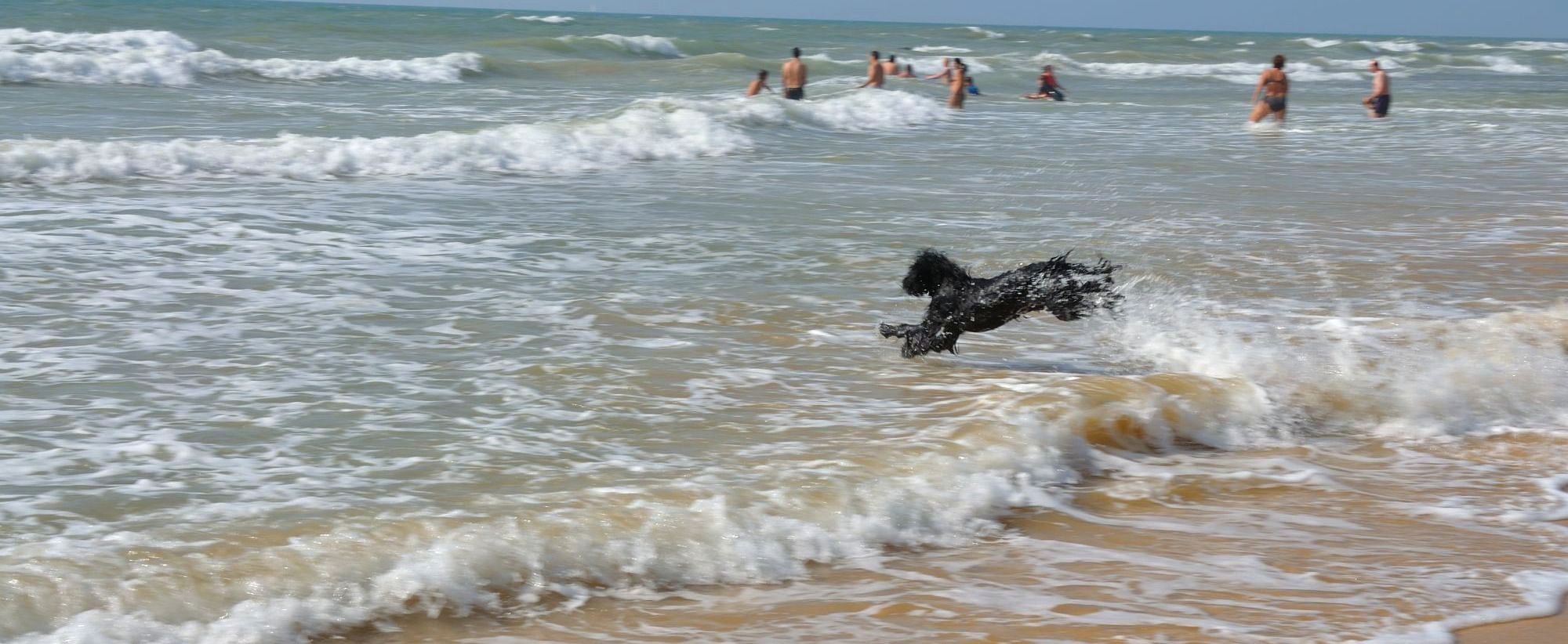
A Tradition That Lives On
The aim of water trials is to develop the dogs’ natural working abilities and to help preserve the traditional working qualities of the breed.
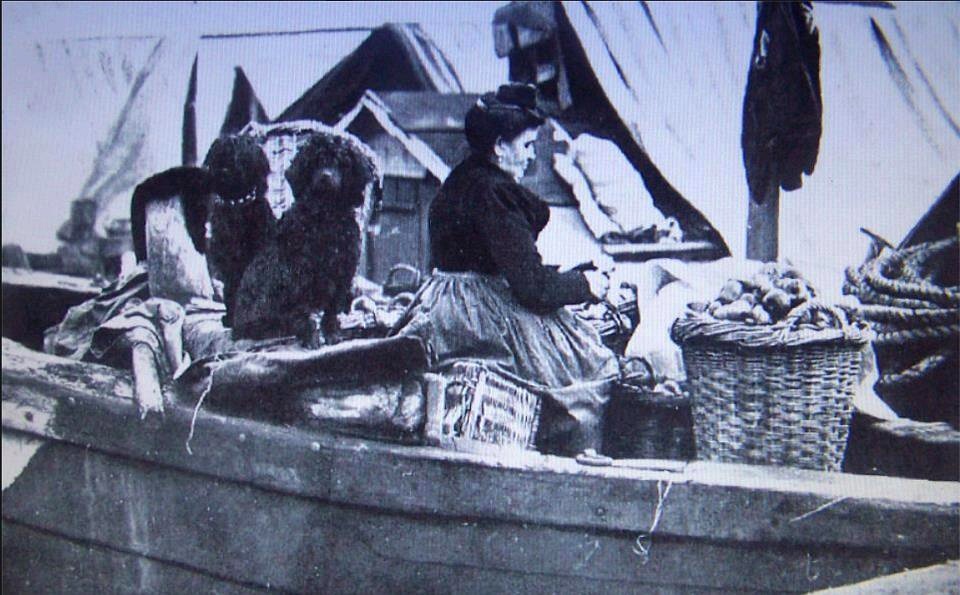
These trials reflect the traditional work performed by Portuguese Water Dogs aboard fishing boats, where they served for generations as valuable partners to fishermen.
Levels of Water Trials
Introductory Level
Designed for dogs at the beginning of their water work training. This level introduces the fundamental skills required for water work.
Advanced
Designed for dogs that have successfully completed Level I and achieved an Excellent rating in three trials. Three C.A.C.T. awards qualify the dog for the National Working Champion title, subject to the applicable national regulations.
Champions
Designed for National Working Champions. Dogs from other countries may also compete if they hold a recognised Working Champion title in their country.
Grading
The final grade is awarded according to the number of points achieved and fulfilment of the trial requirements.
Foundation Working Skills
Swimming, retrieving and first underwater retrieves.
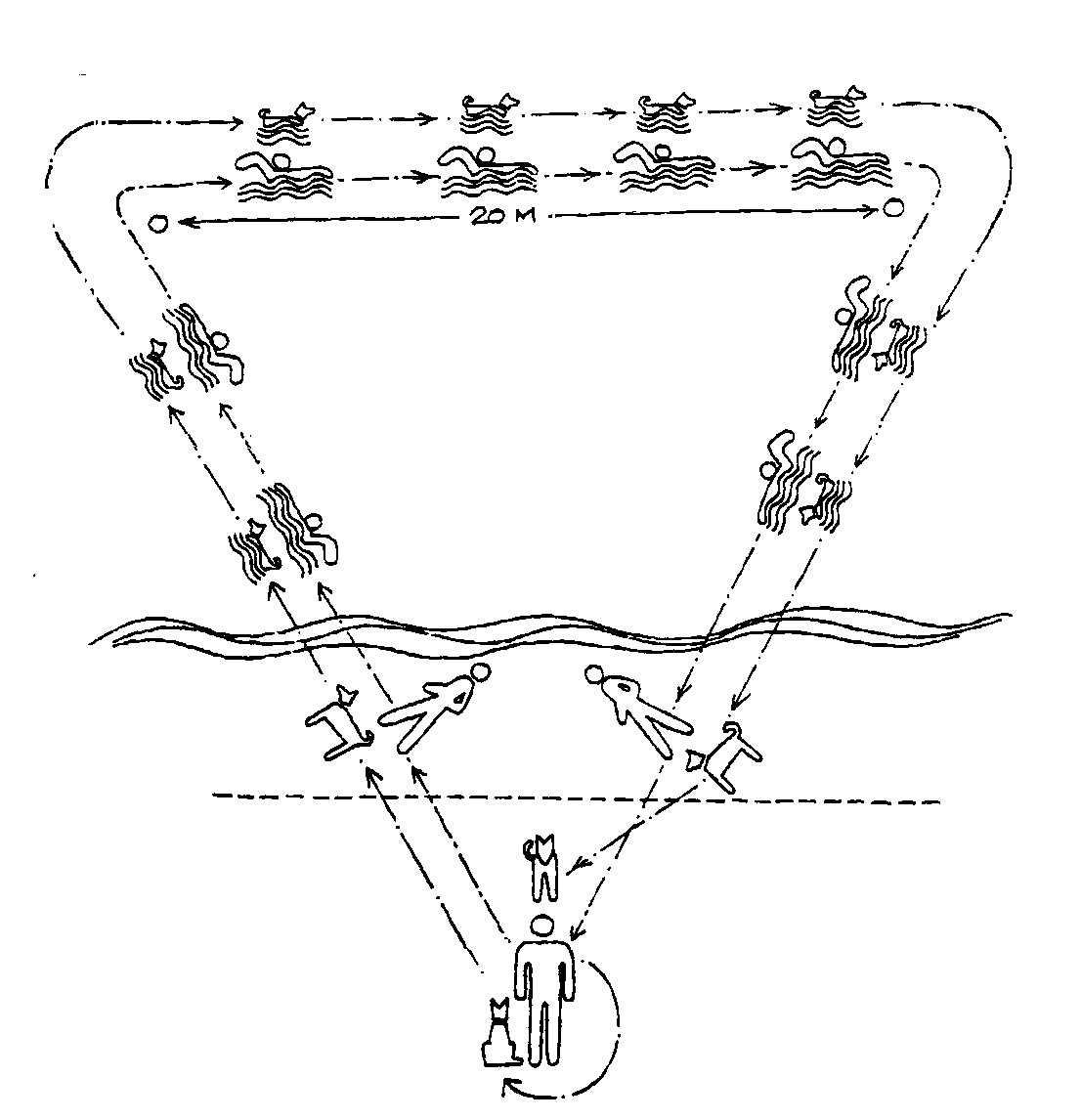
Timed Swim
Assessed criteria:
- behaviour before entering the water
- speed between the buoys
- swimming technique and rhythm
- obedience.
A – Behaviour Before Entering the Water
The dog should enter the water willingly, without hesitation or reluctance.
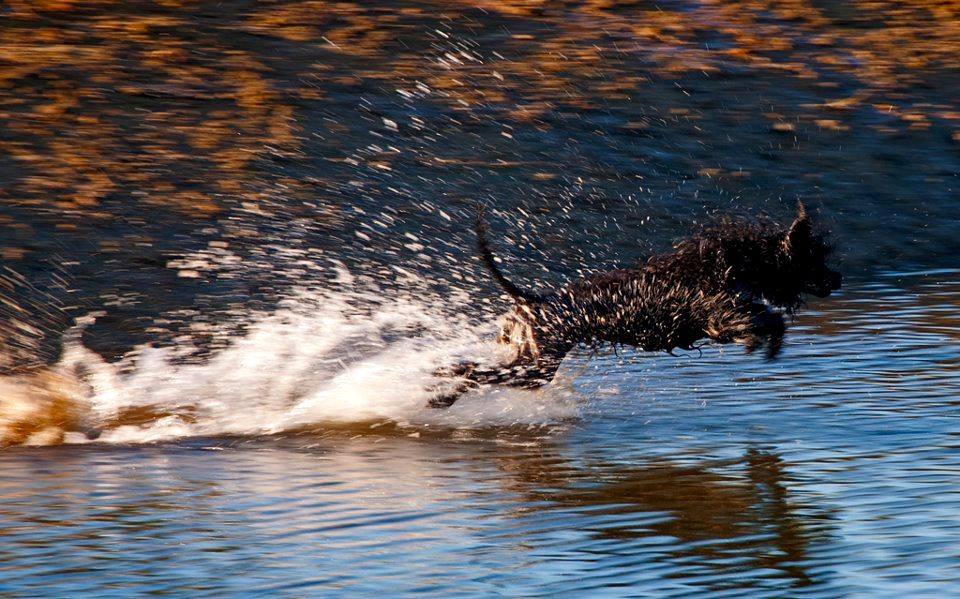
B – Speed Between the Buoys
The time taken by the dog to swim the designated distance between the buoys is measured.
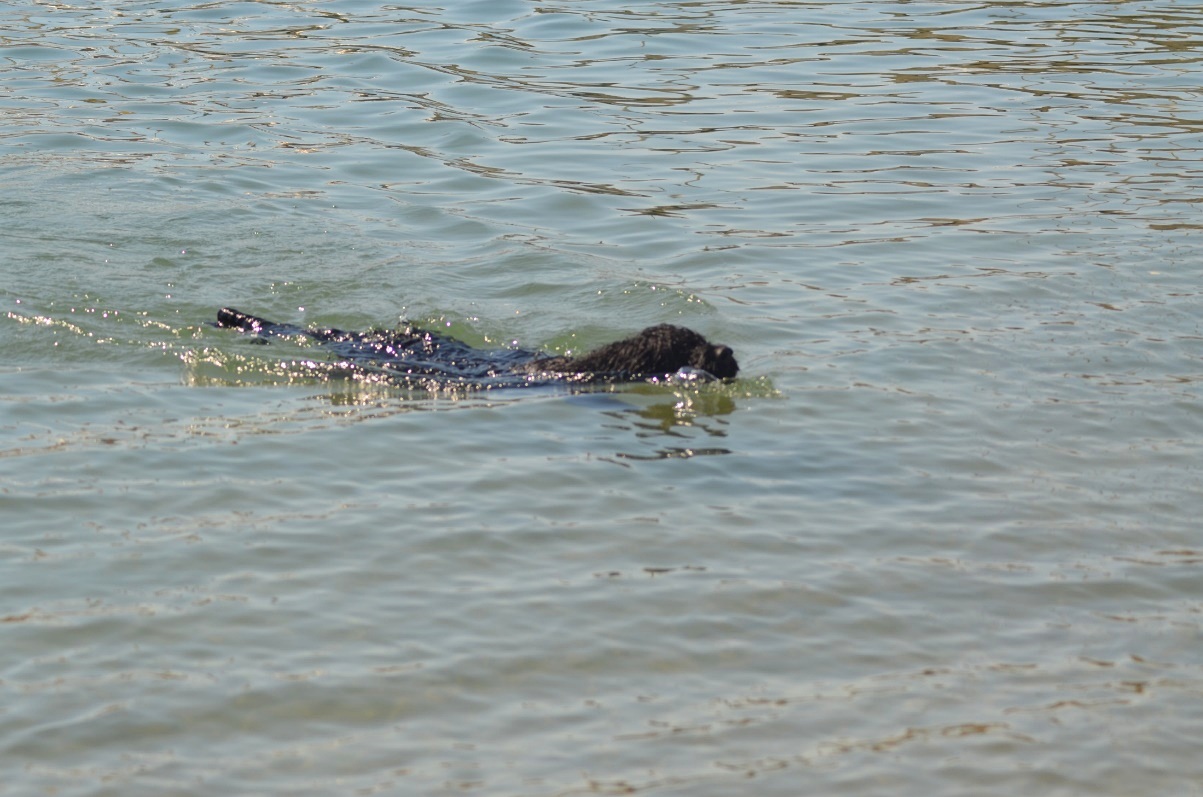
C – Swimming Technique and Rhythm
The dog’s swimming technique, fluidity, rhythm and natural movement in the water are assessed.
D – Obedience
The dog’s response to the handler’s commands and its cooperation throughout the exercise are assessed.
Floating Object Retrieve
Assessed criteria:
- attention to where the object lands
- picking up the object
- delivery of the object
- obedience.
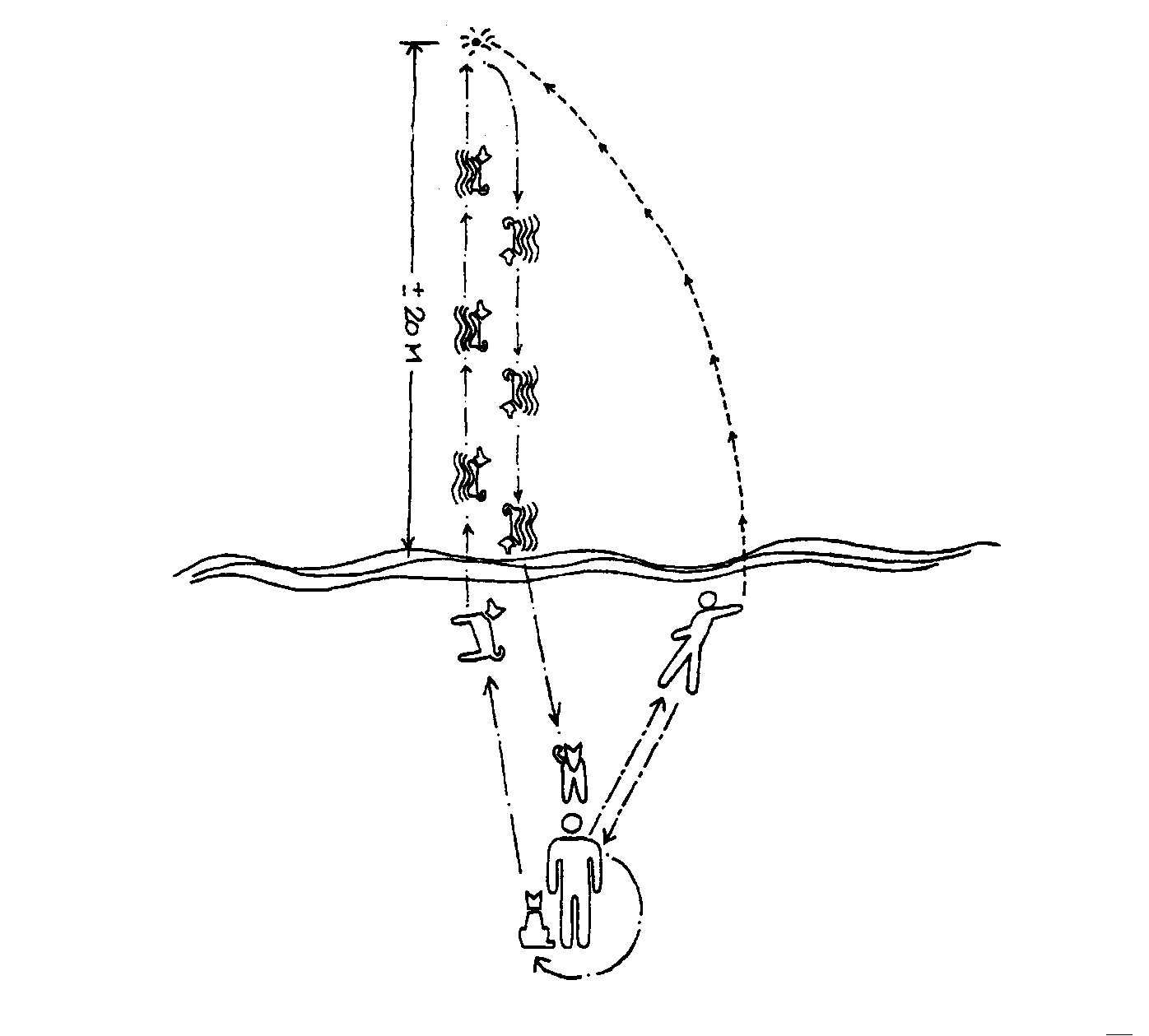
A – Attention to Where the Object Lands
The dog should closely watch where the object lands in the water so that, once sent, it can immediately determine the correct direction.
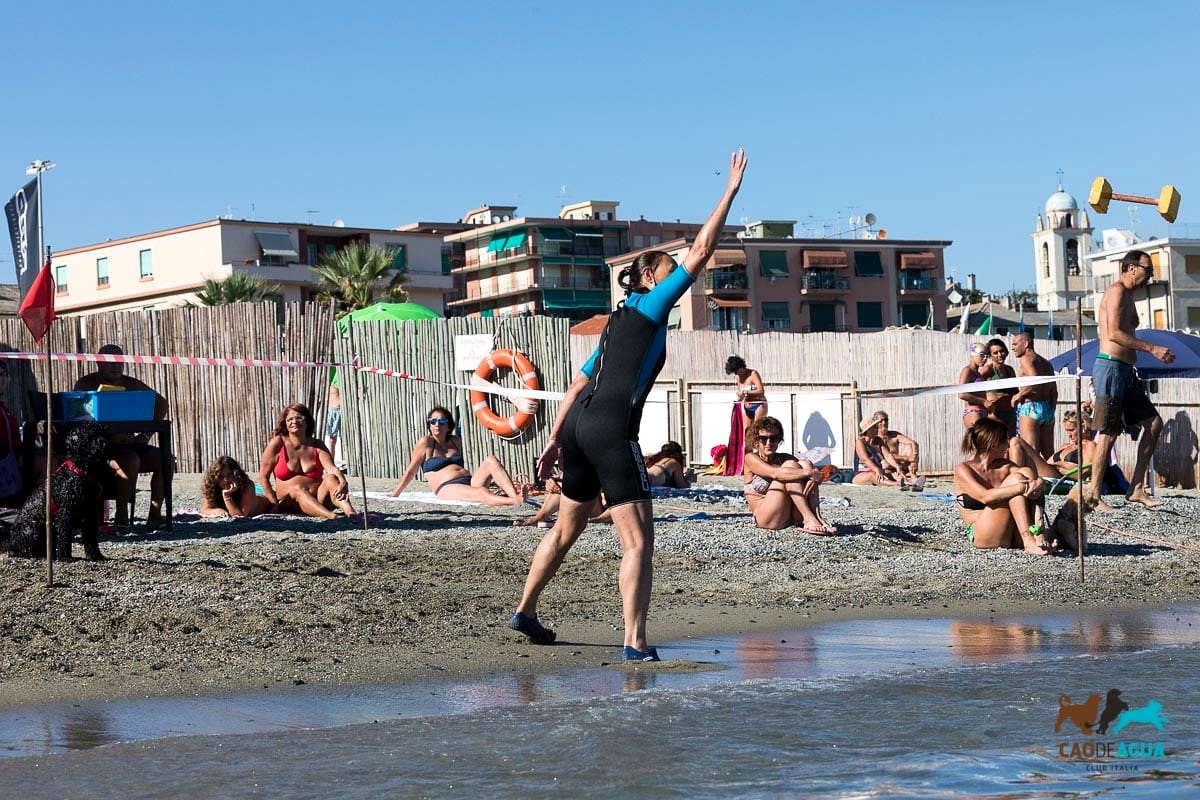
B – Picking Up the Object
The way in which the dog takes hold of the object in the water and prepares to retrieve it is assessed.
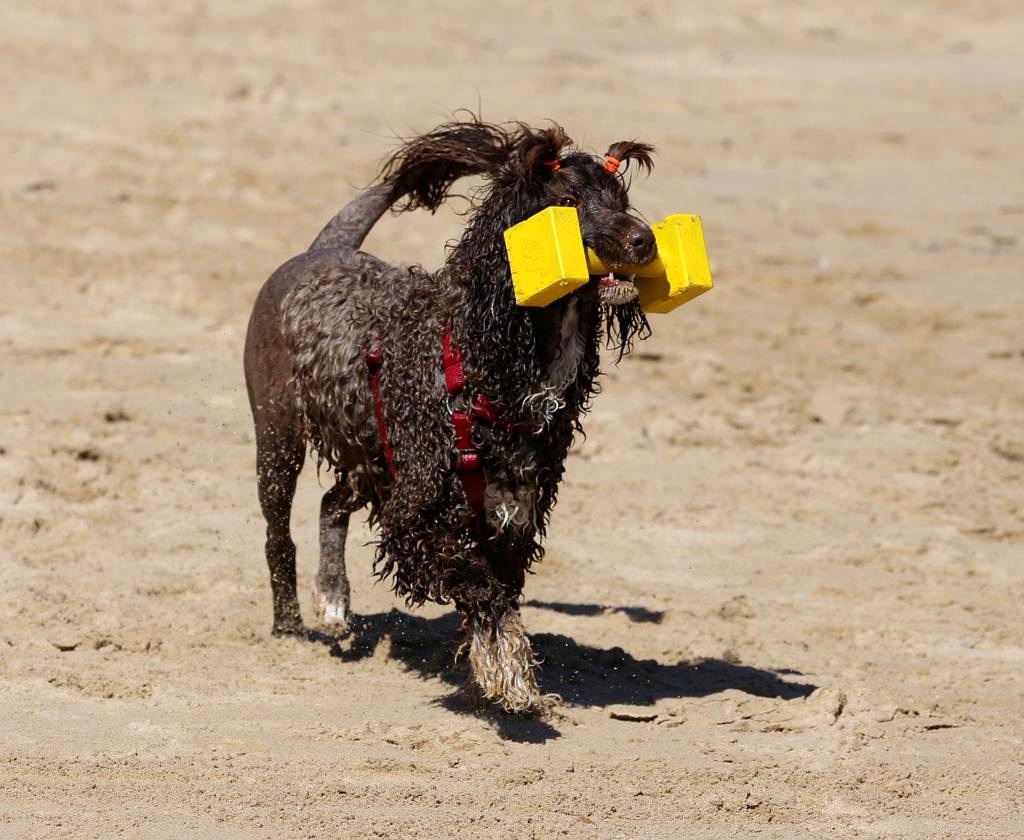
Incorrect Grip
An incorrect grip on the object may negatively affect the final score for the exercise.
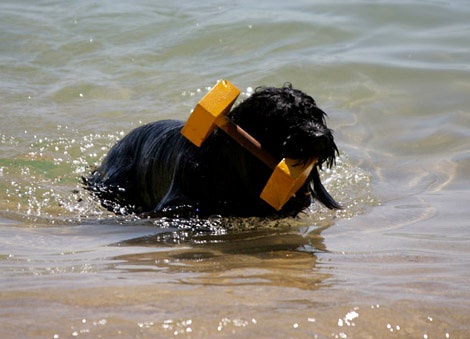
C – Delivery of the Object
After returning, the dog must deliver the object directly into the handler’s hand.
D – Obedience
The dog’s response to commands and its cooperation with the handler throughout the exercise are assessed.
- if the dog does not swim directly towards the object after being sent by the handler
- if the dog does not deliver the object directly into the handler’s hand
Underwater Retrieve
Assessed criteria:
- preparation for the dive
- retrieval result
- delivery of the object into the handler’s hand
- obedience.
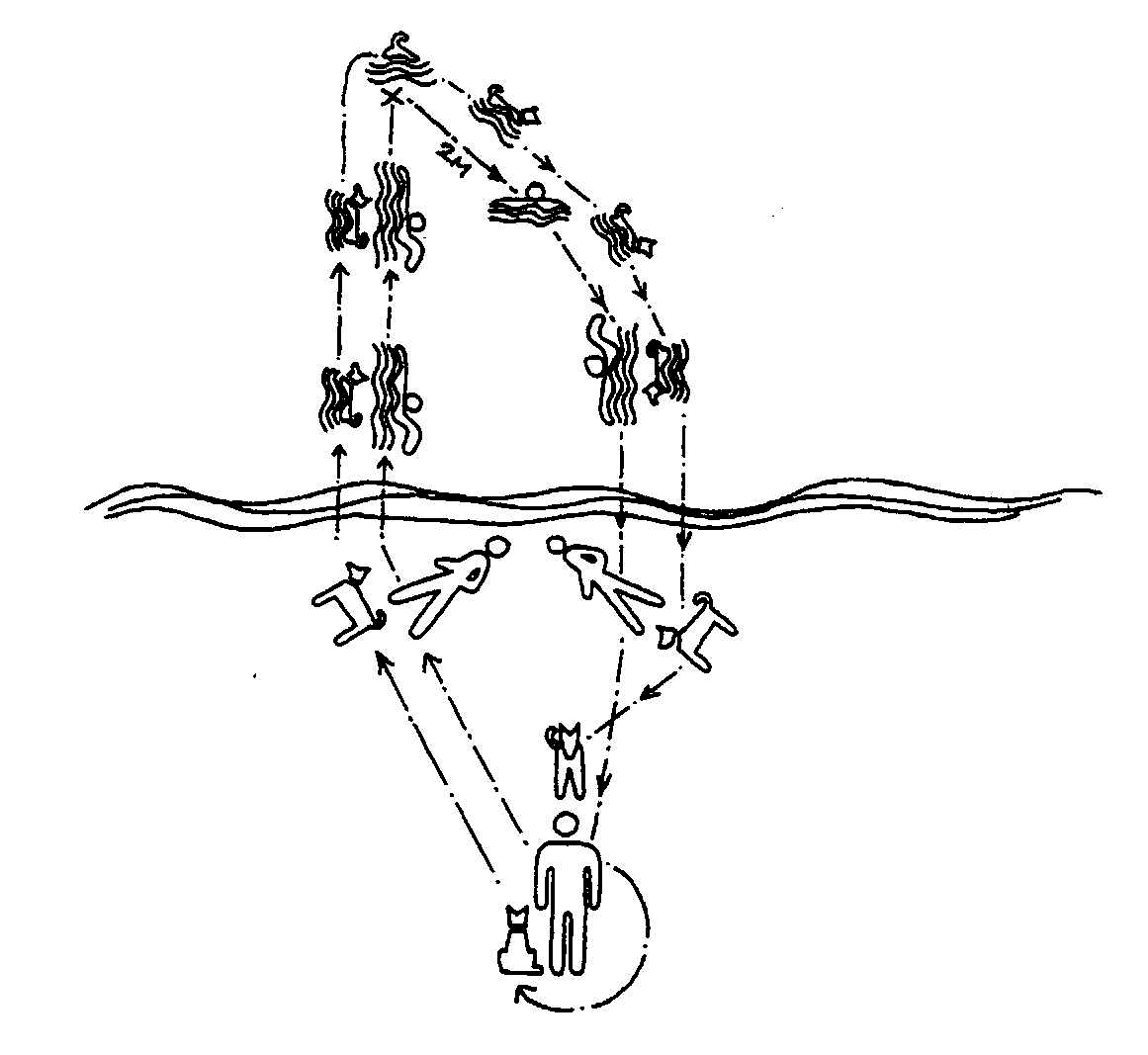
A – Preparation for the Dive
The dog swims to the location of the submerged object and dives to retrieve it. The quality and effectiveness of the dive are assessed.
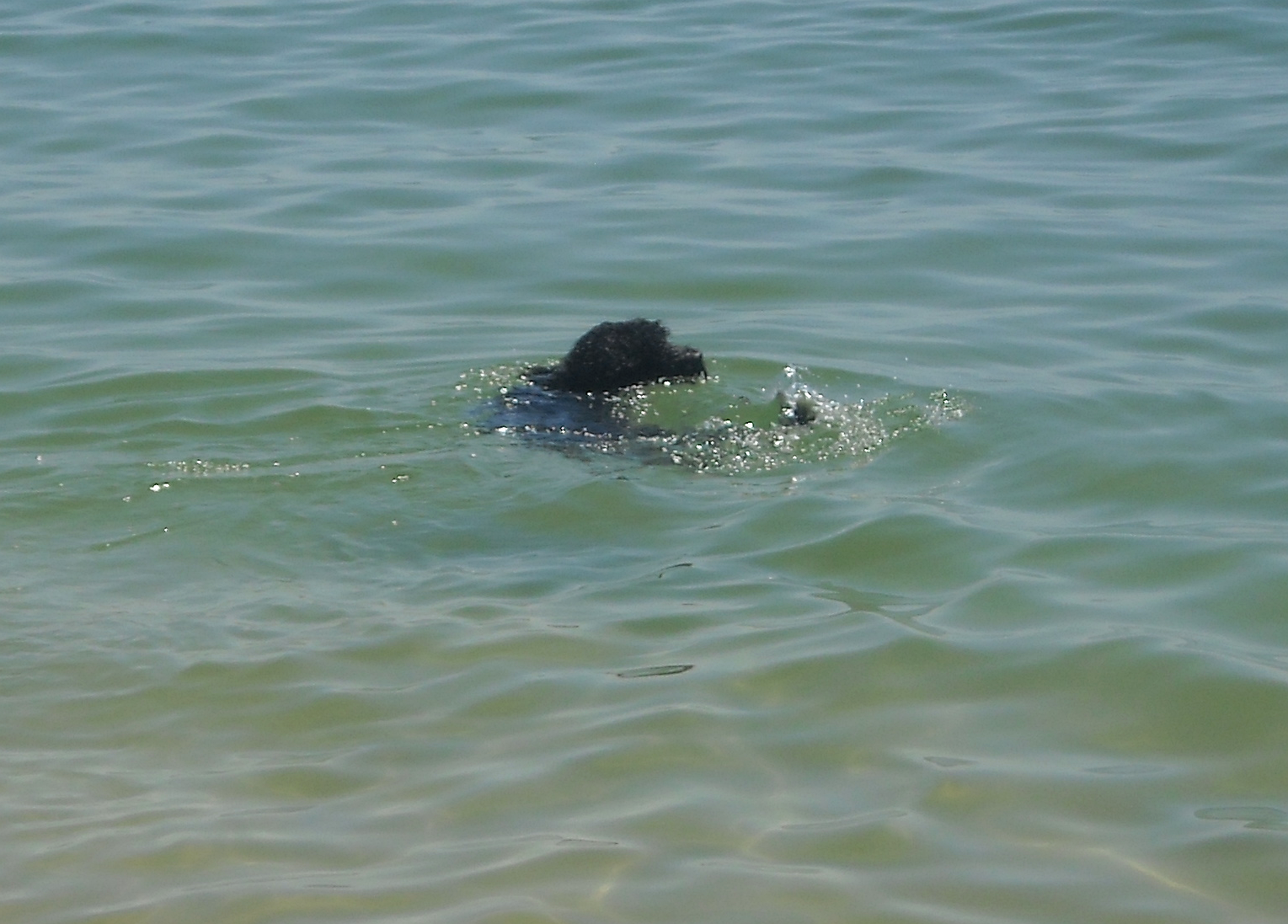
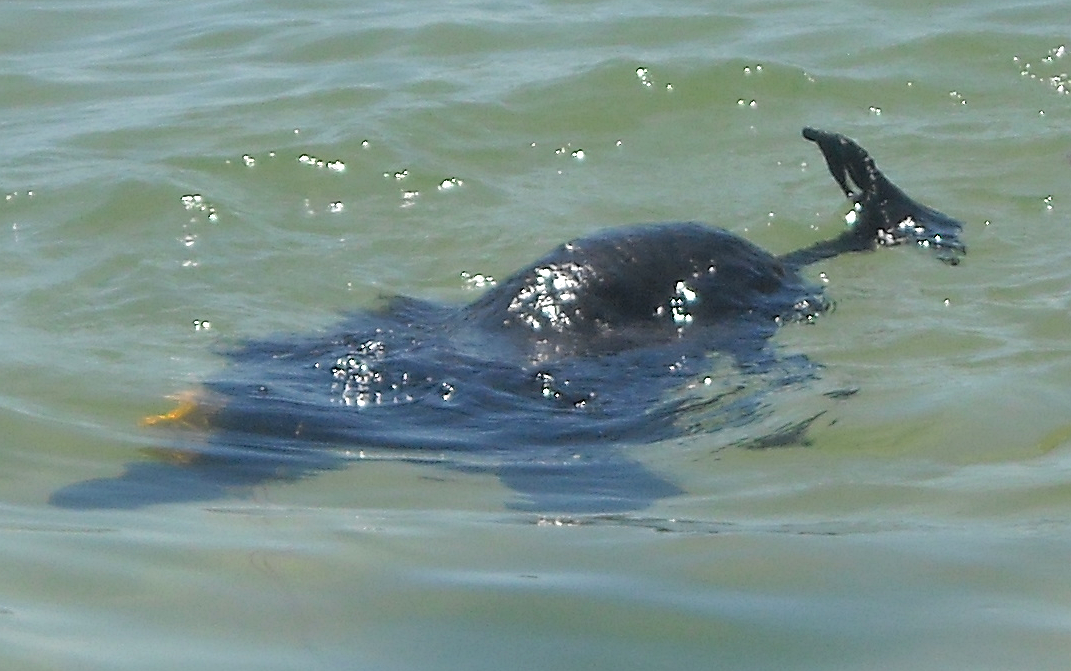
- successful retrieval of the object – maximum points
- if the dog retrieves the object but subsequently drops it, points are deducted
- if the dog dives but does not retrieve the object, it may receive 1–2 points depending on the quality and duration of the dive
C – Delivery of the Object
The way in which the dog delivers the retrieved object directly into the handler’s hand is assessed.
D – Obedience
The dog’s cooperation with the handler and its response to commands are assessed.
Advanced Working Skills
Endurance swimming, working with a floating line and deep-water retrieves.
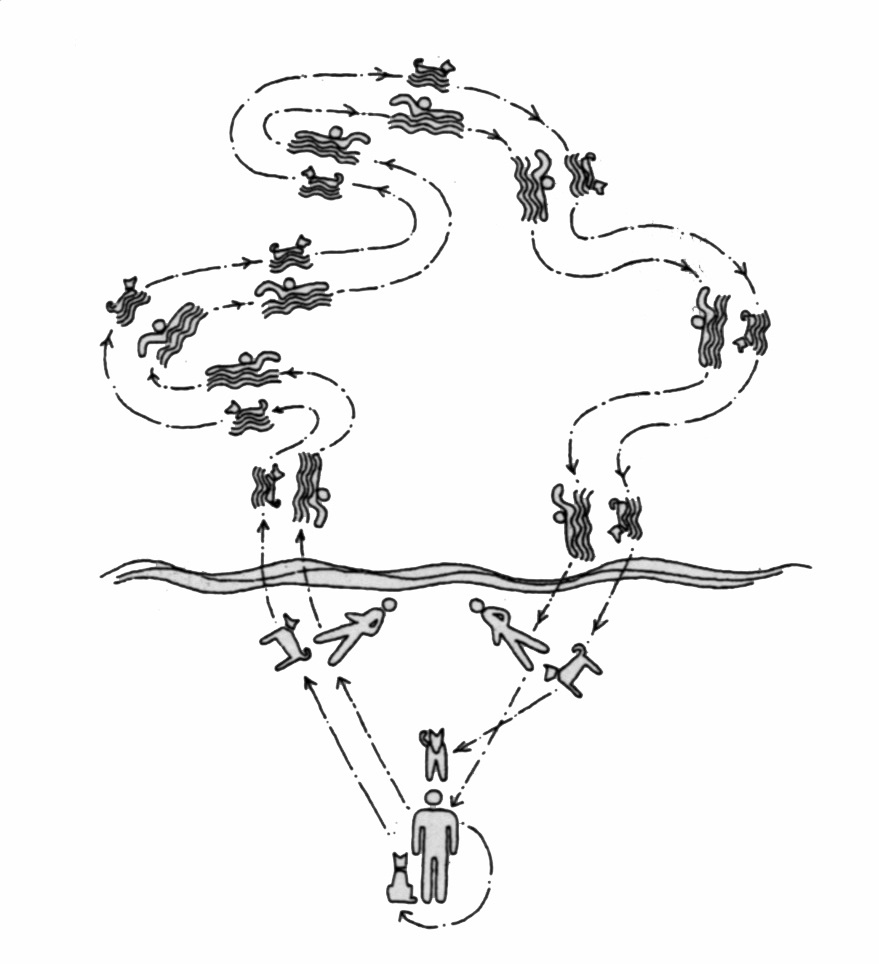
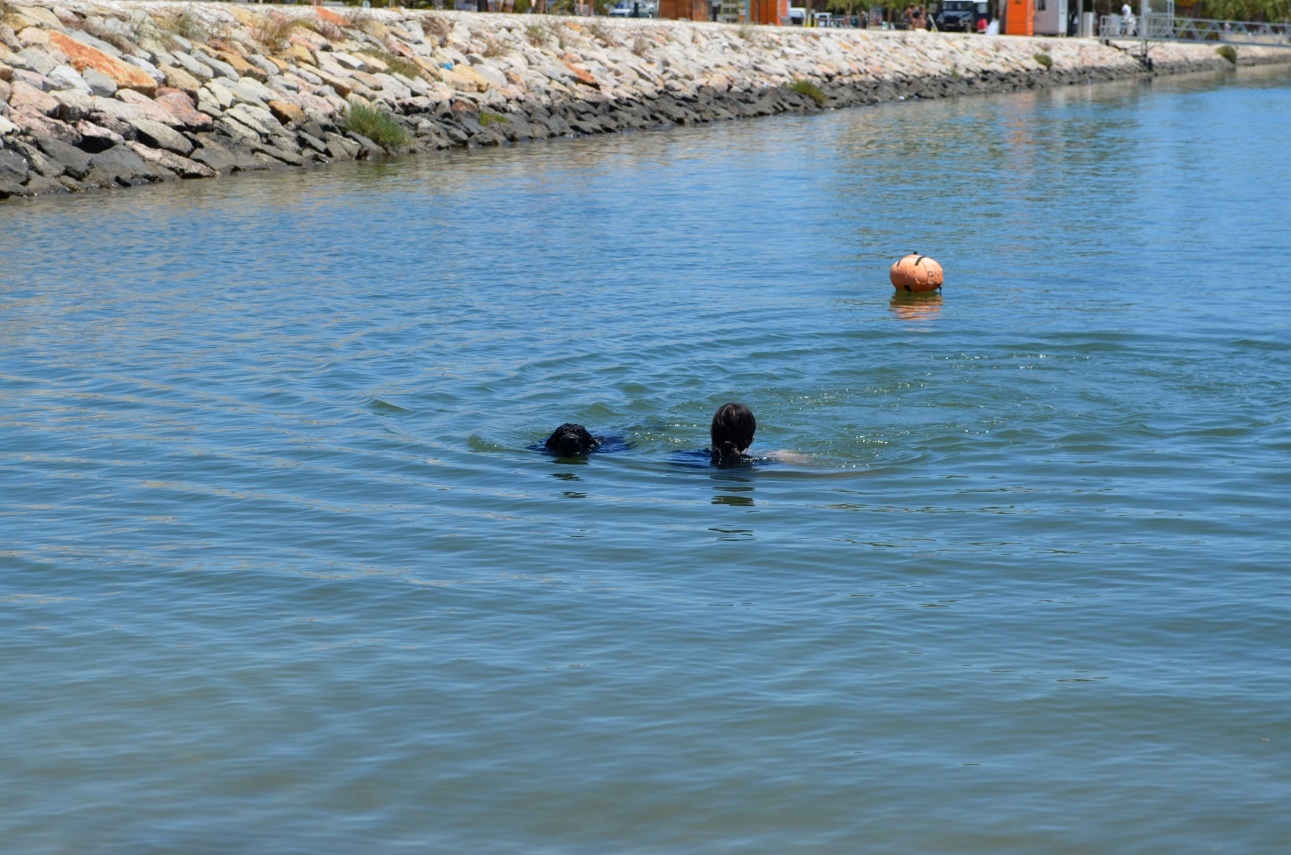
Endurance Swim
Assessed criteria:
- behaviour before entering the water
- endurance
- swimming technique and rhythm
- obedience.
Floating Line Retrieve
Simulation of traditional work with a fishing net.
Assessed criteria:
- attention to where the line lands
- picking up the line
- delivery of the object
- obedience.
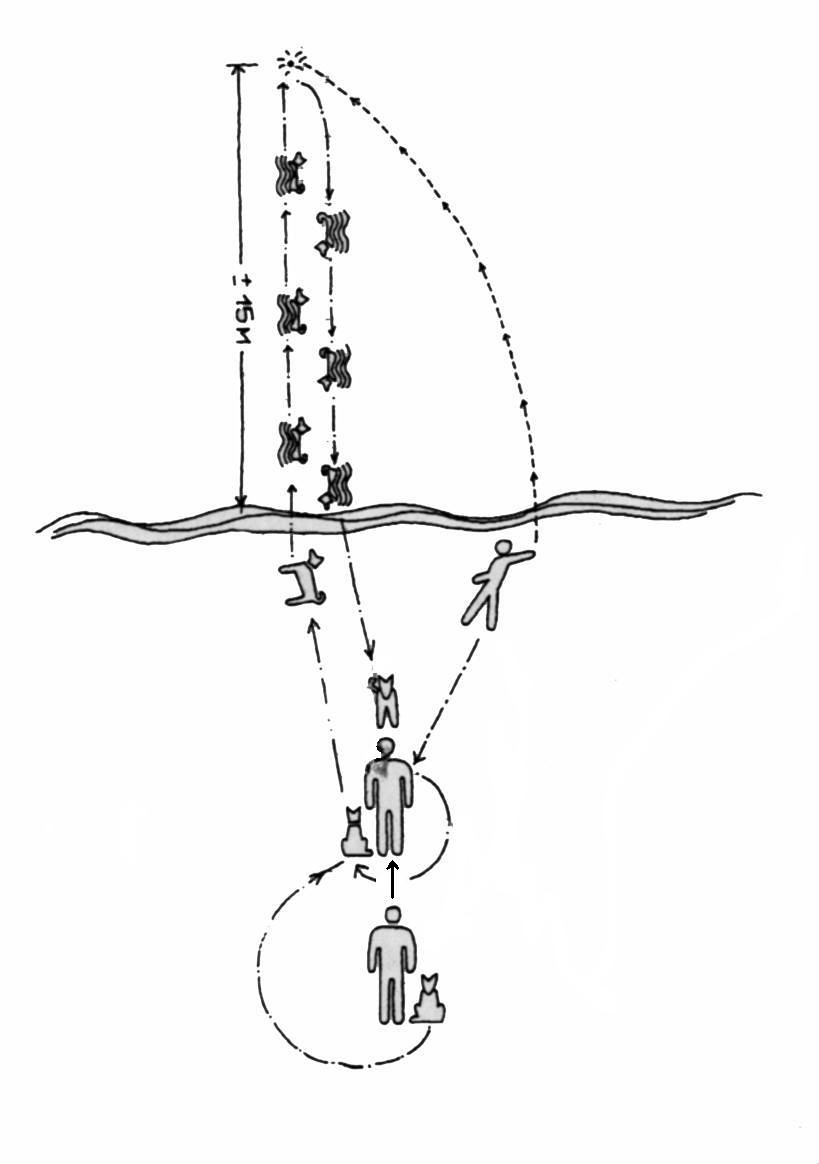
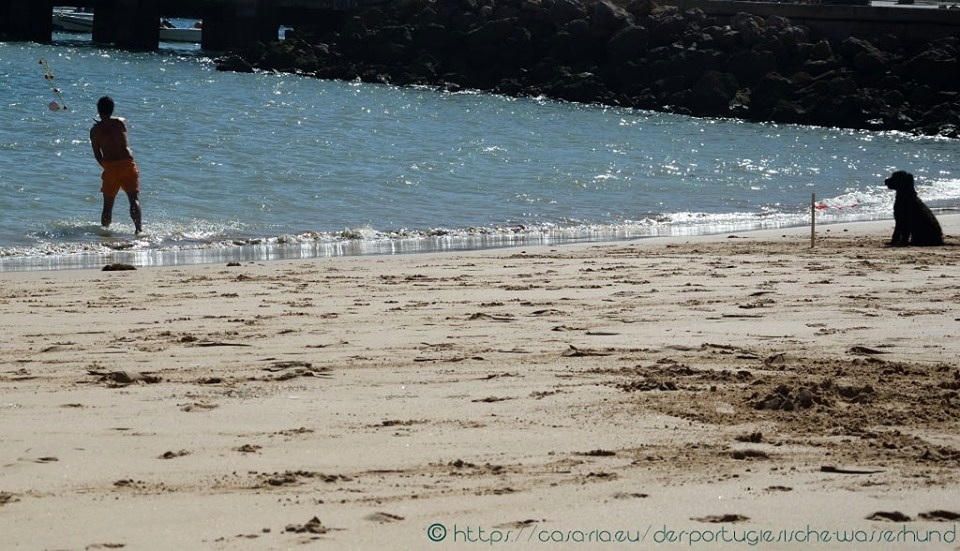
A – Attention to Where the Object Lands
The dog should watch where the floating line lands and, once sent, correctly determine the direction towards it.
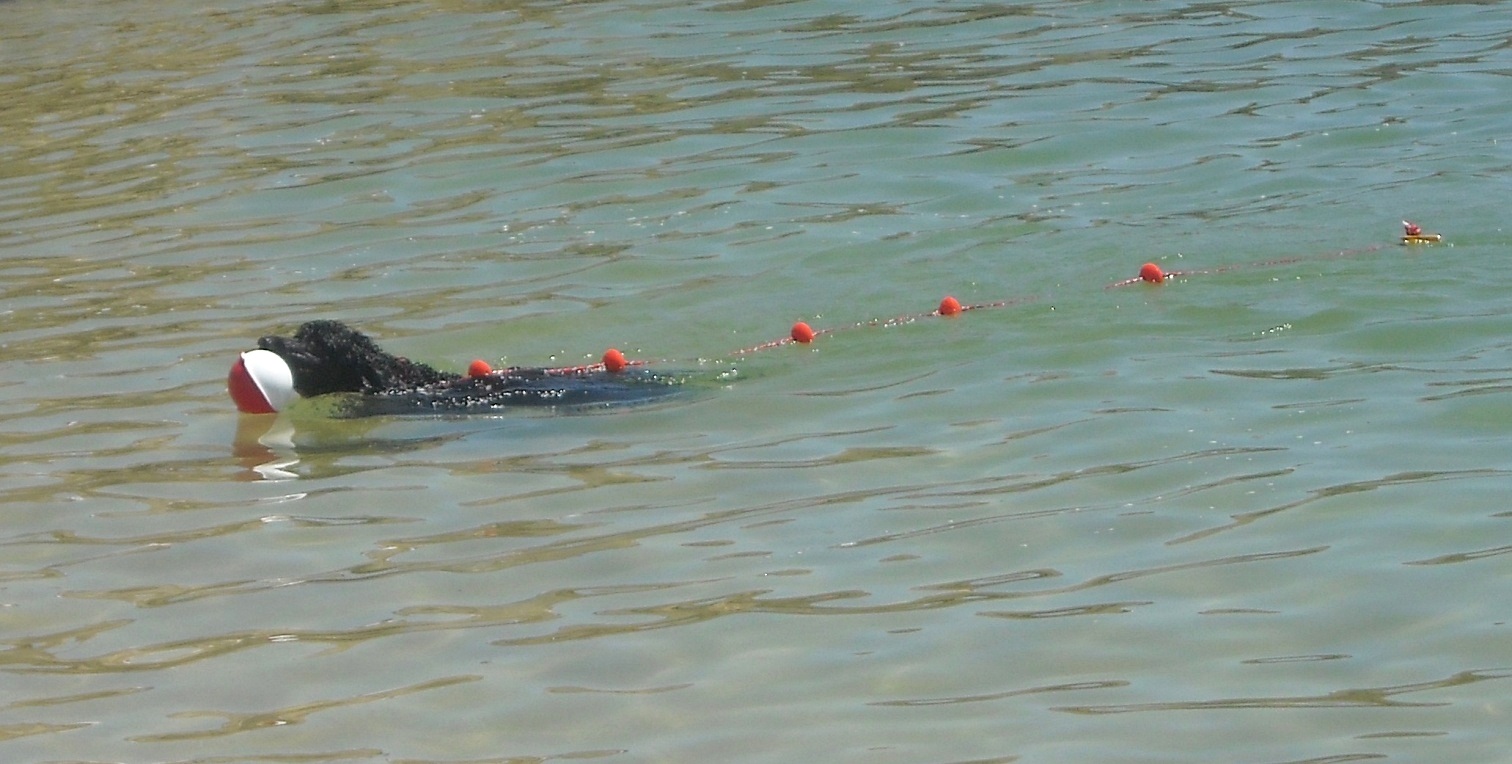
B – Picking Up the Floating Line
The correct and effective way of taking hold of the floating line with floats is assessed.
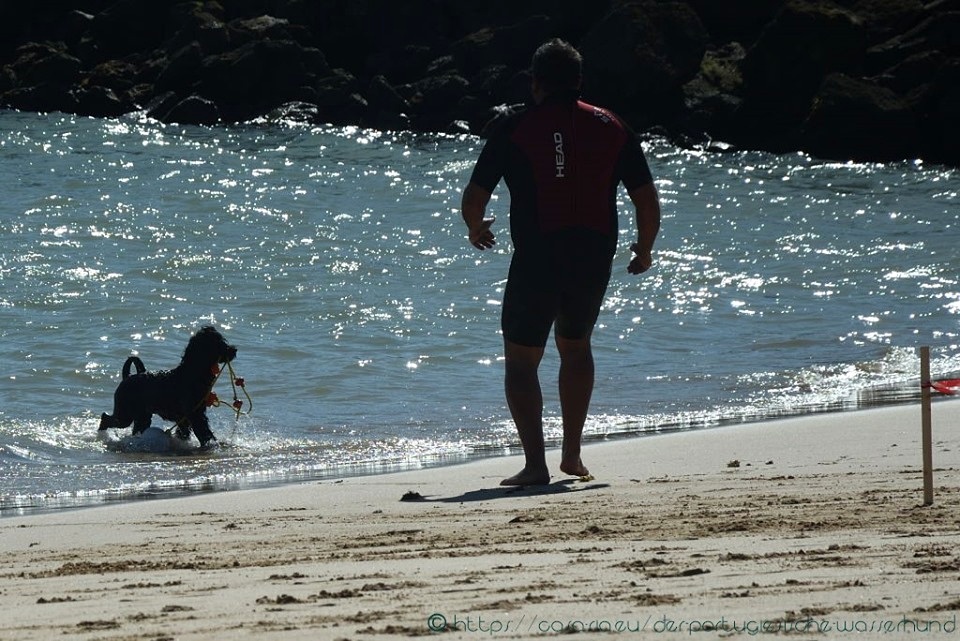
Incorrect Grip
An incorrect grip on the floating line is reflected negatively in the scoring.
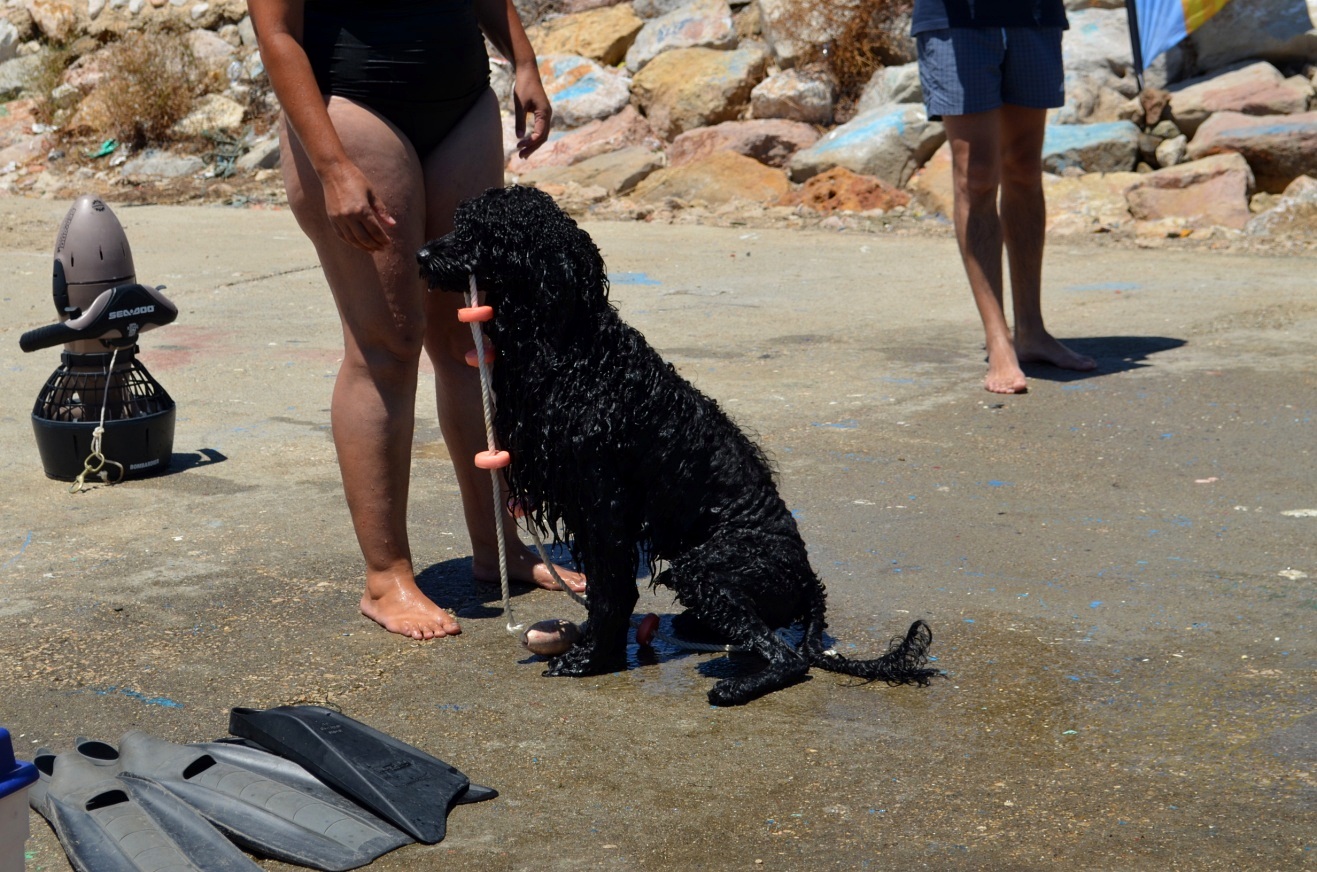
C – Delivery of the Object
After returning, the dog delivers the floating line to the handler. The manner and accuracy of the delivery are assessed.
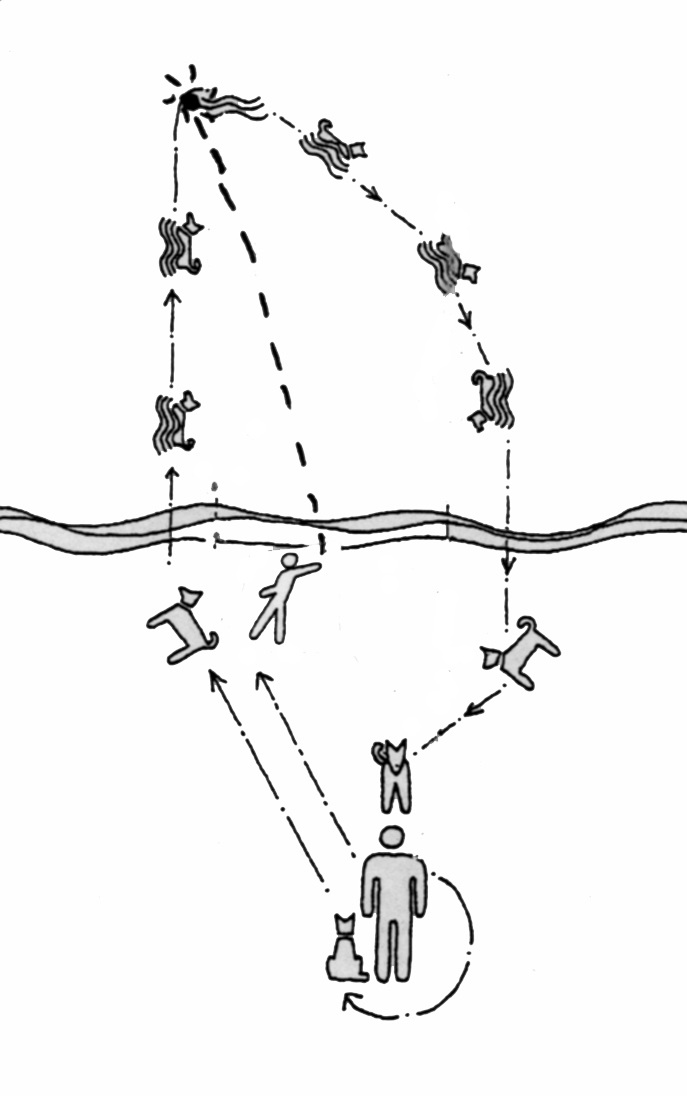
Deep-Water Retrieve
Assessed criteria:
- preparation and diving technique
- retrieval result
- delivery of the object into the handler’s hand
- obedience.
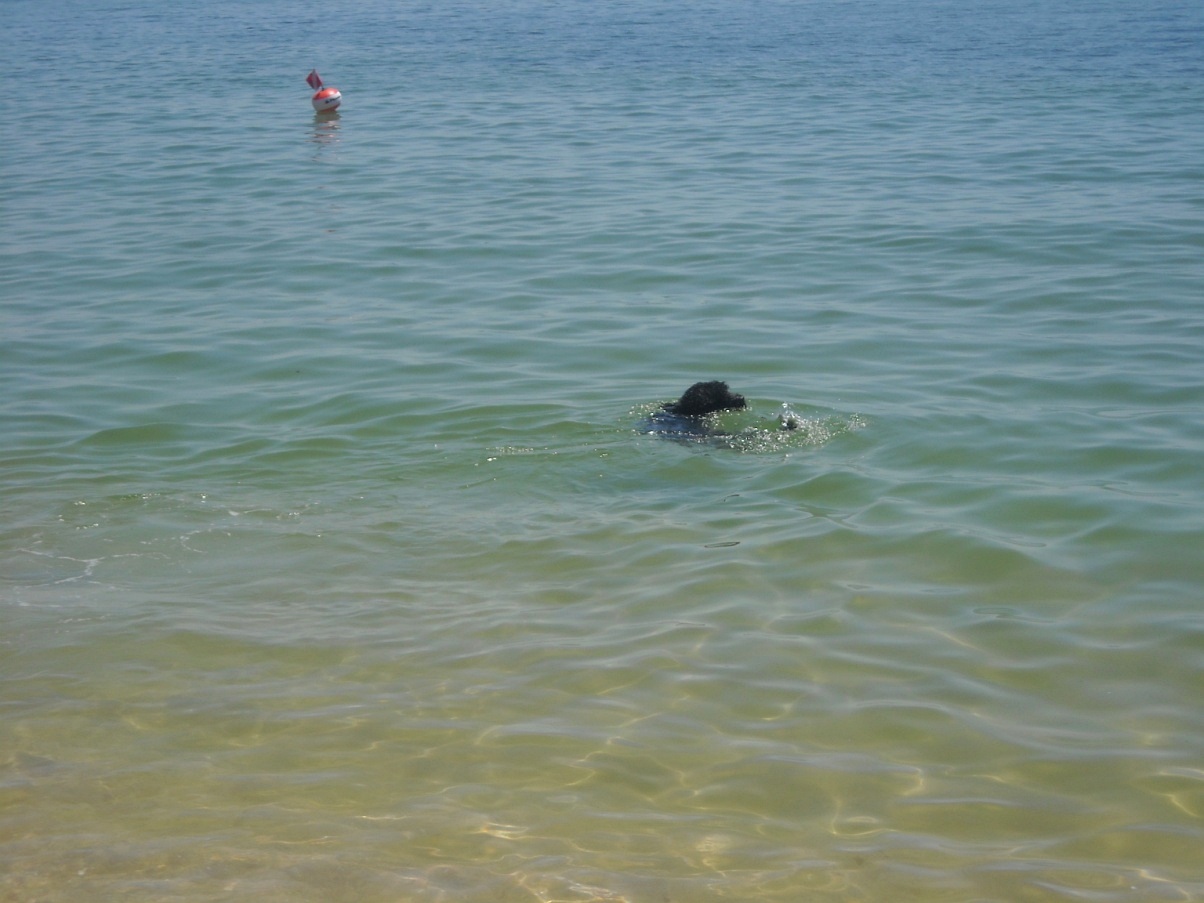
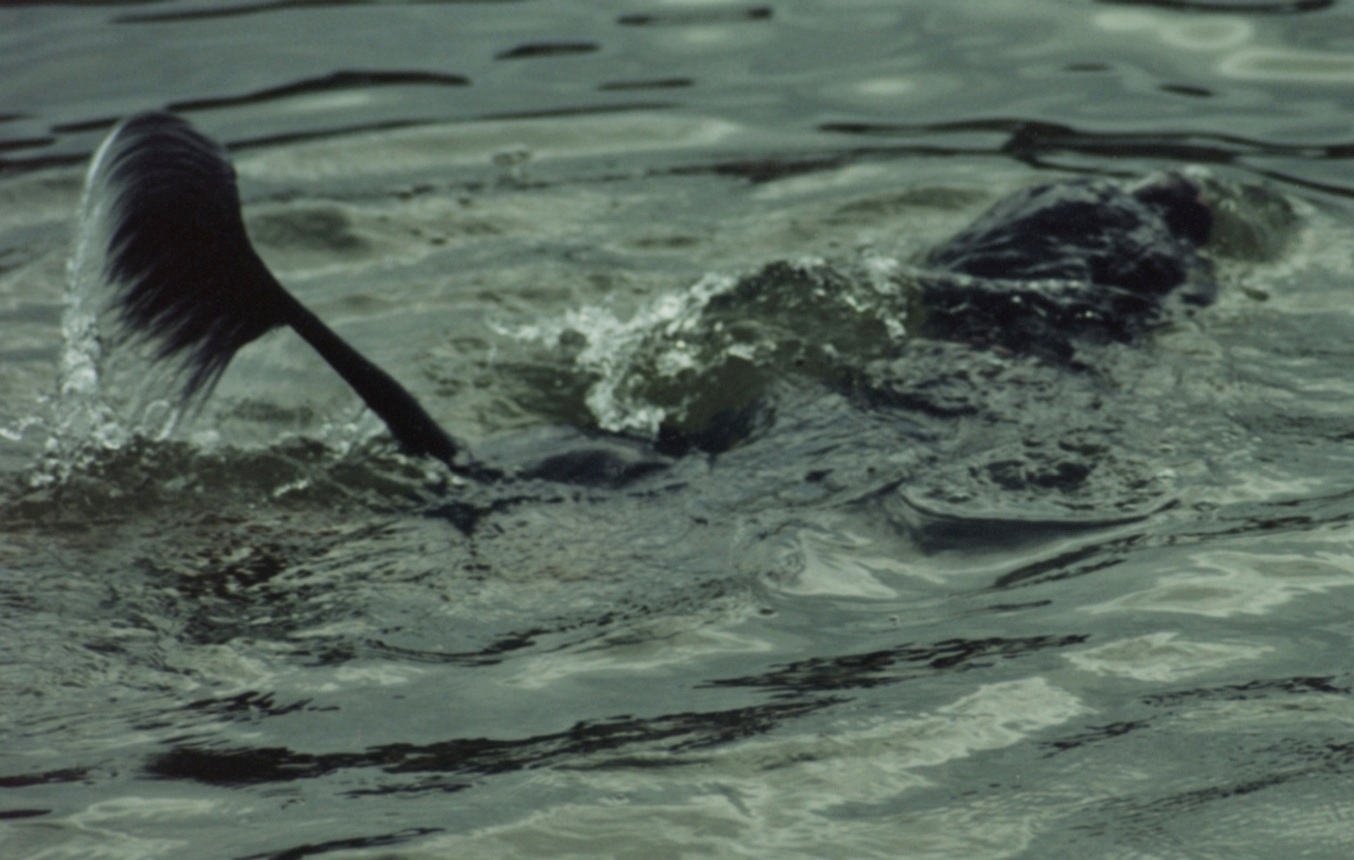
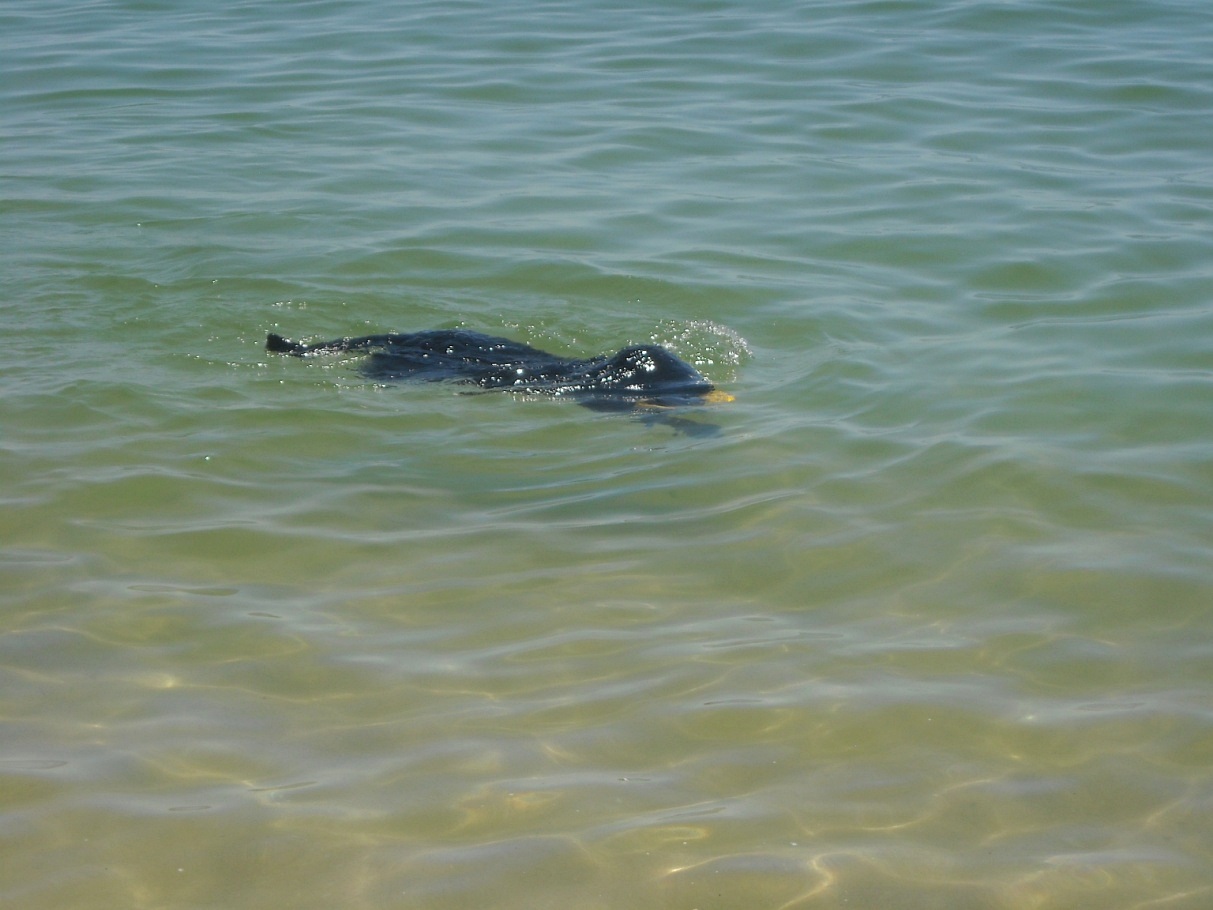
B – Retrieval Result
The successful retrieval of the object, the number of diving attempts and the time the dog spends underwater are assessed.
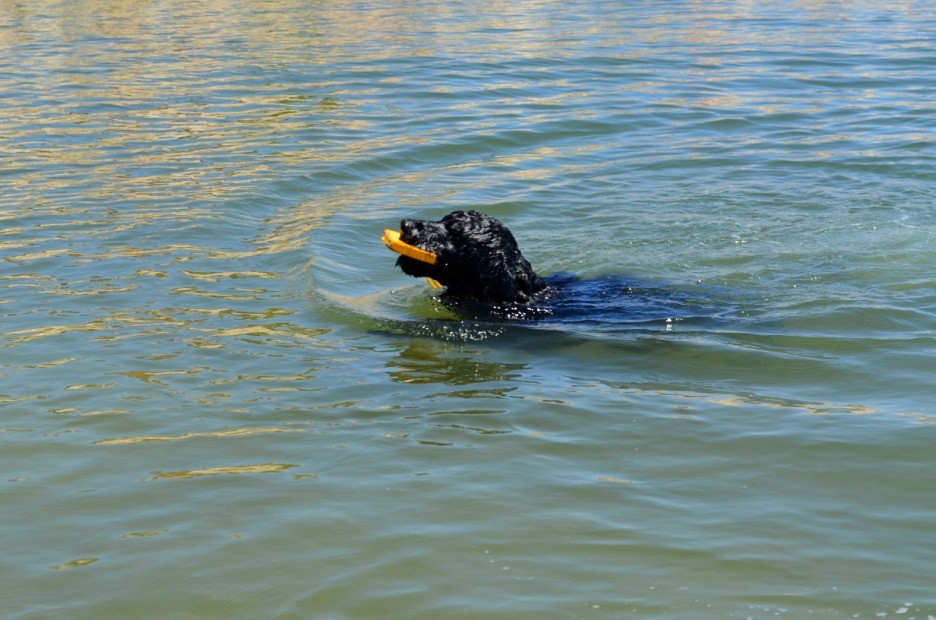
C – Delivery of the Object
After returning, the manner in which the dog delivers the retrieved object directly into the handler’s hand is assessed.
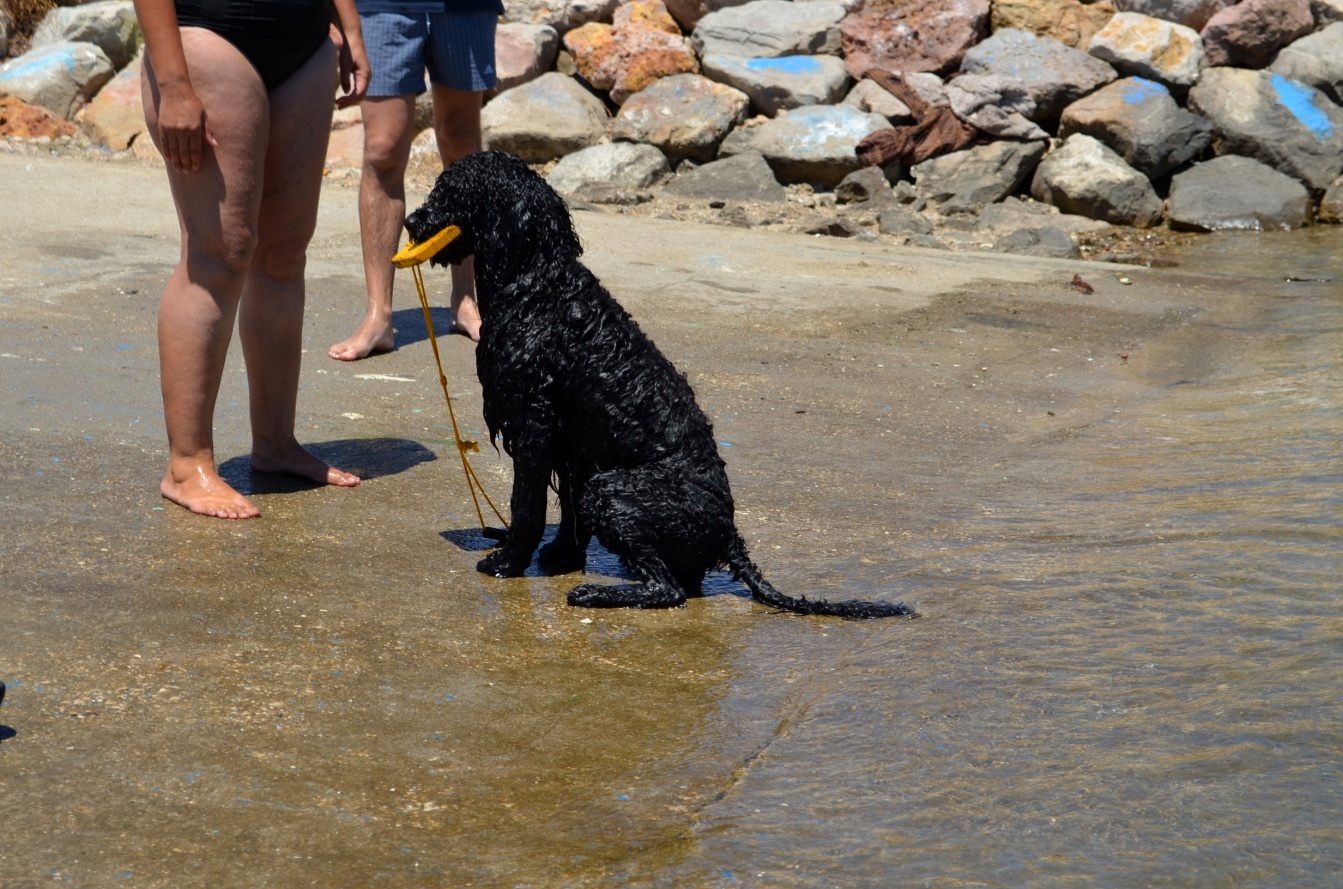
D – Obedience
The dog’s responsiveness, reaction to commands and cooperation with the handler are assessed.
Highest Working Level
Advanced work involving the boat, the water and the shore.
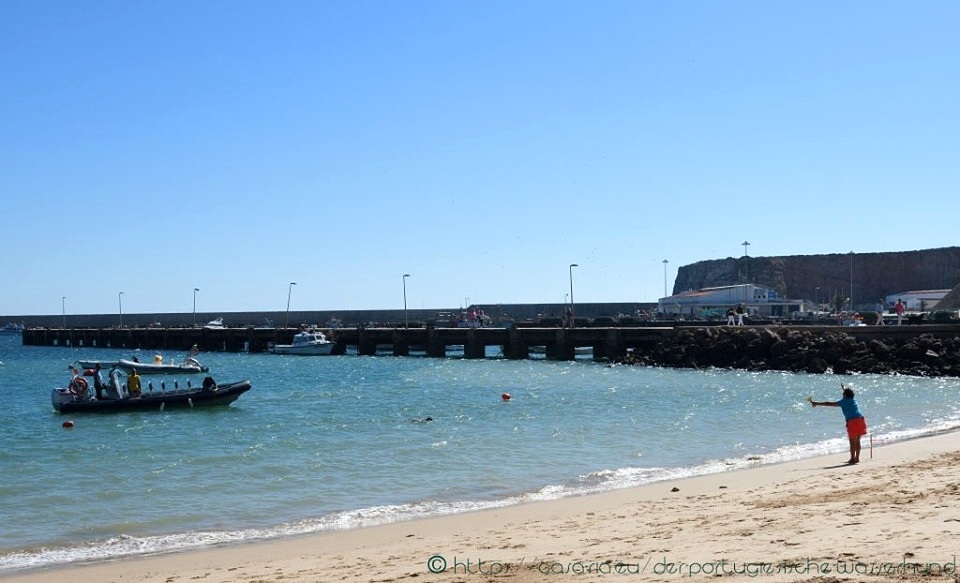
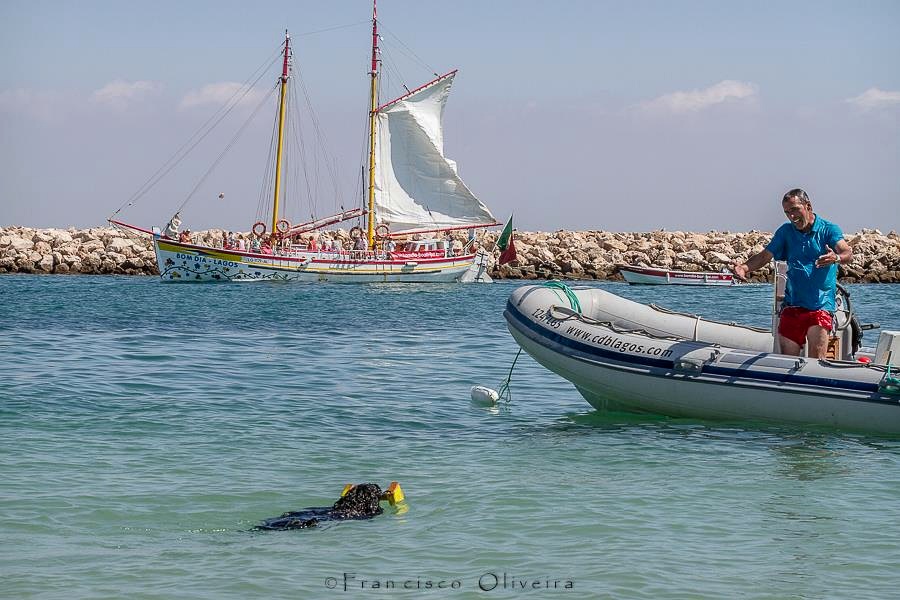
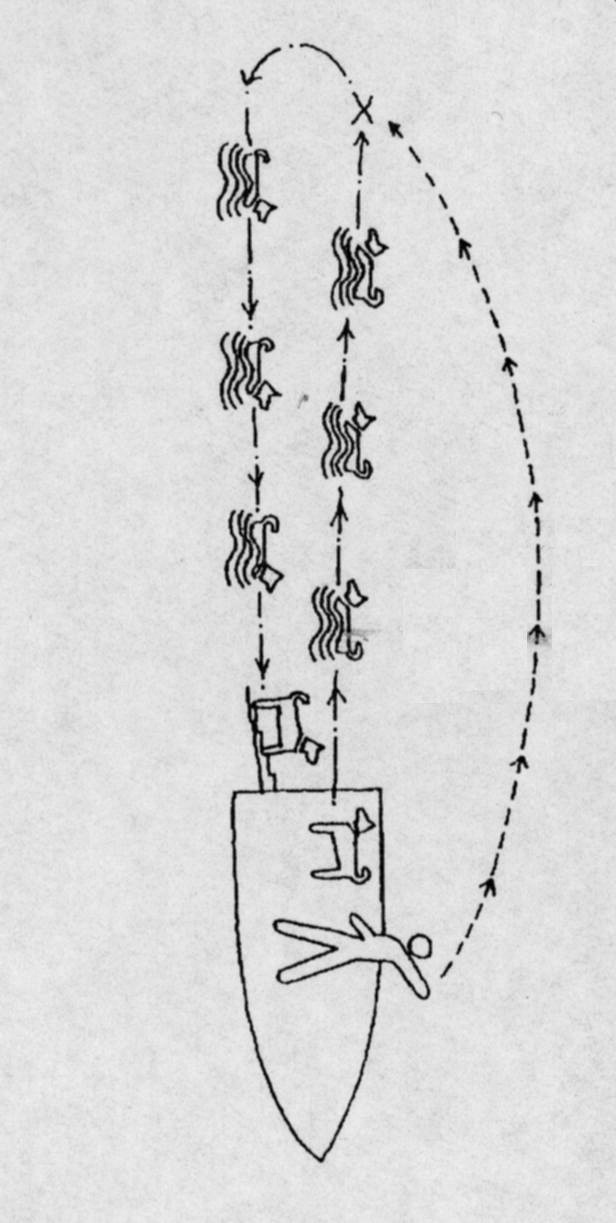
Directed Swim from Boat to Shore and Back
Assessed criteria:
- entry into the water and swimming rhythm
- ability to maintain the designated direction
- delivery of the object
- obedience.
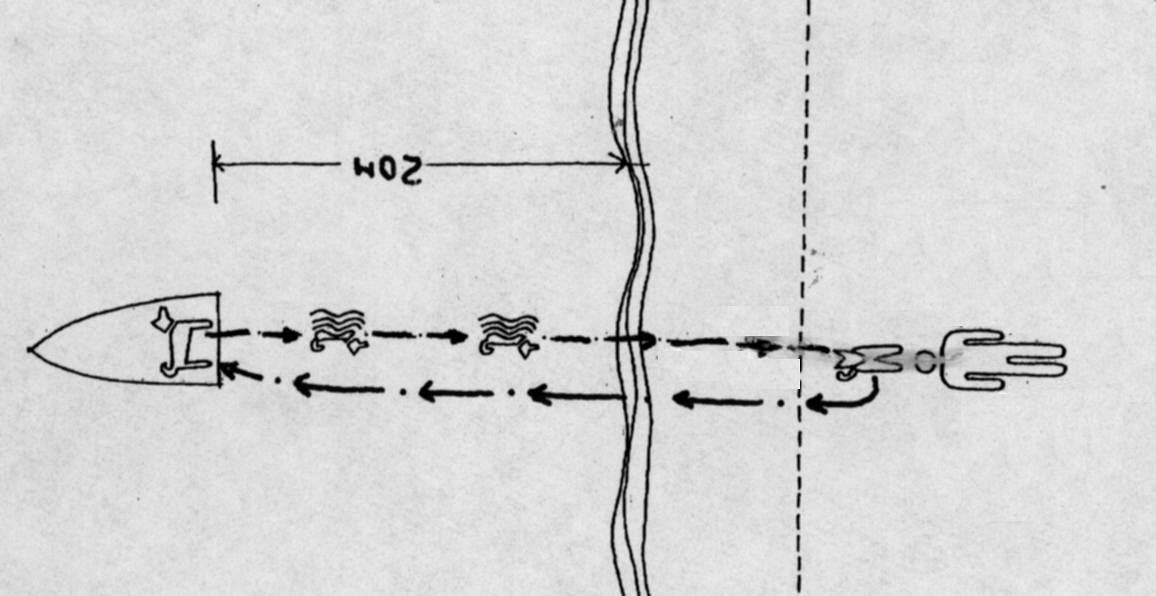
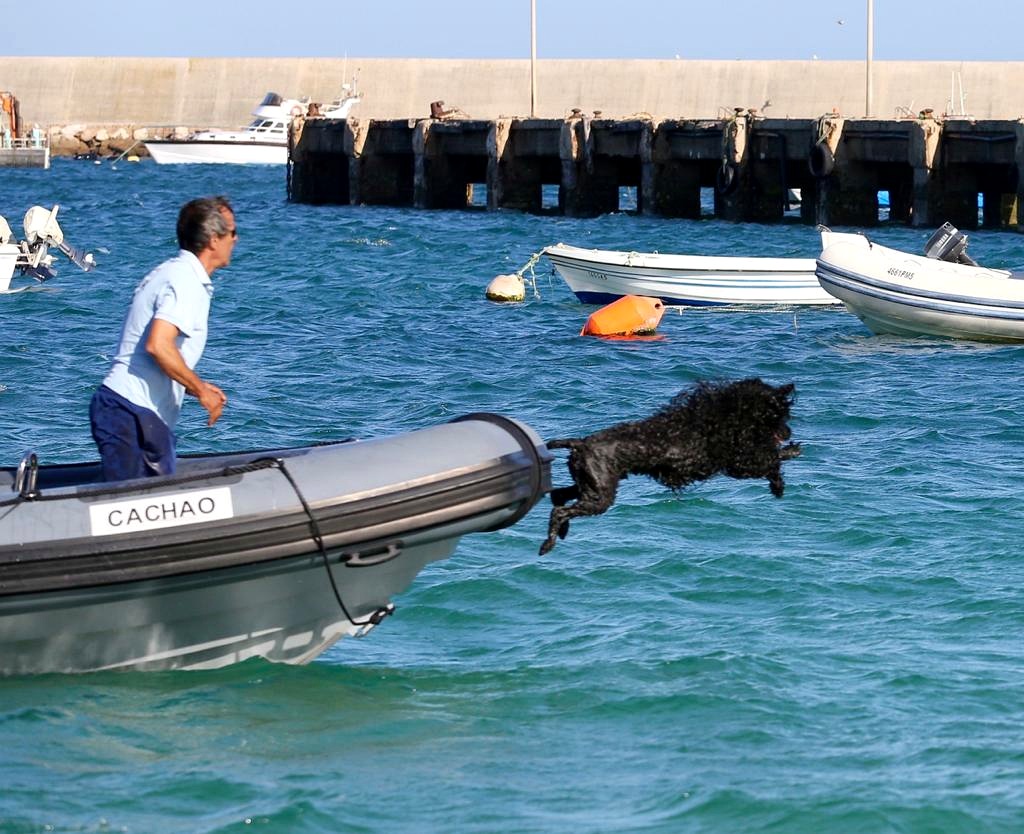
A – Entry into the Water and Swimming Rhythm
The dog’s technique when jumping from the boat into the water is assessed, followed by its swimming rhythm and style.
B – Ability to Maintain the Designated Direction
While swimming, the dog should maintain the designated direction and respond correctly to the handler’s commands.
Deep-Water Retrieve
Assessed criteria:
- jumping into the water and locating the object,
- retrieval of the object
- delivery of the object
- obedience.
B – Retrieval of the Object
The way in which the dog locates, retrieves and brings the object back is assessed.
C – Delivery of the Object
Correct delivery of the object to the handler is assessed.
D – Obedience
Boat Work and Retrieve
Assessed criteria:
- jumping into the water and diving technique,
- retrieval result
- delivery of the object into the handler’s hand
- obedience.
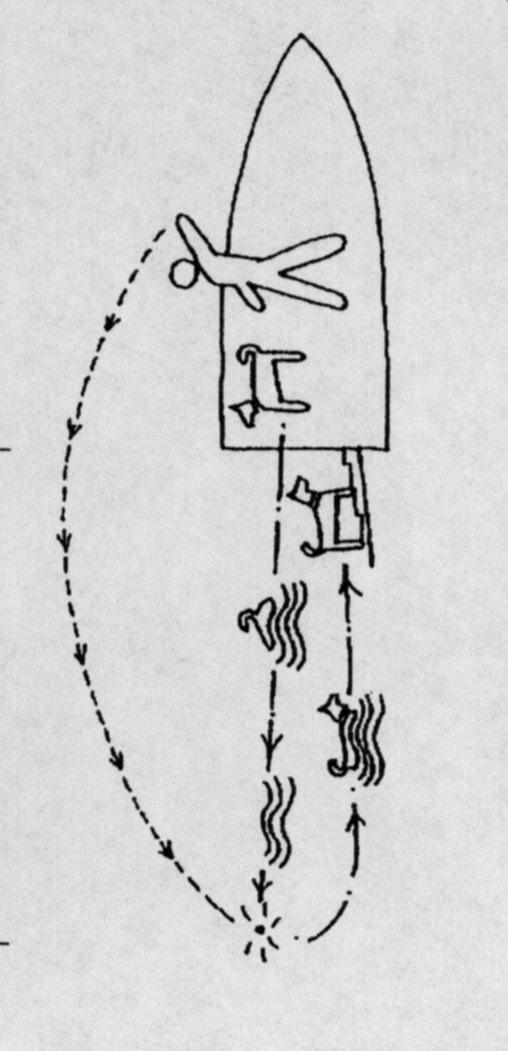
A – Jumping into the Water and Diving Technique
The dog’s willingness and technique when jumping into the water, followed by the way in which the dive is performed, are assessed.
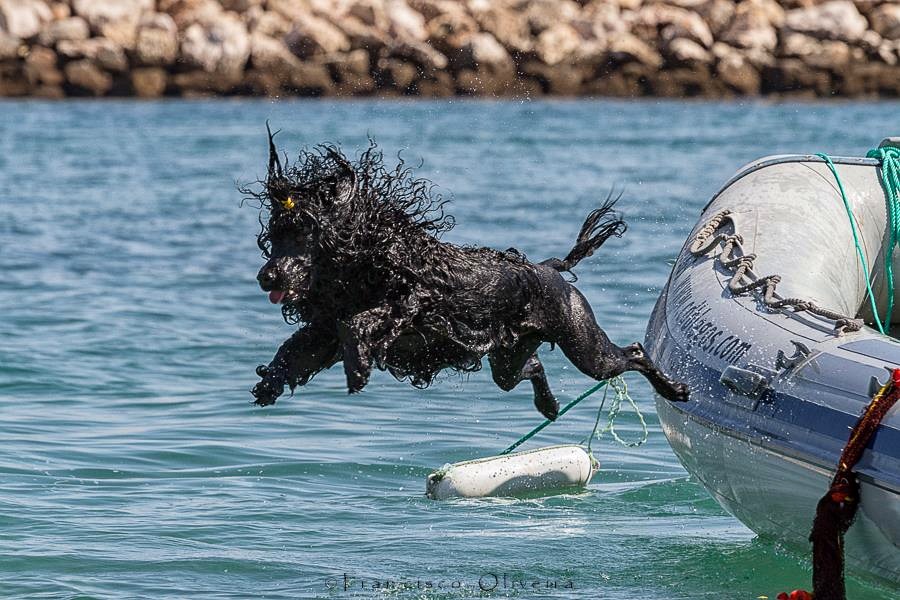
B – Retrieval Result
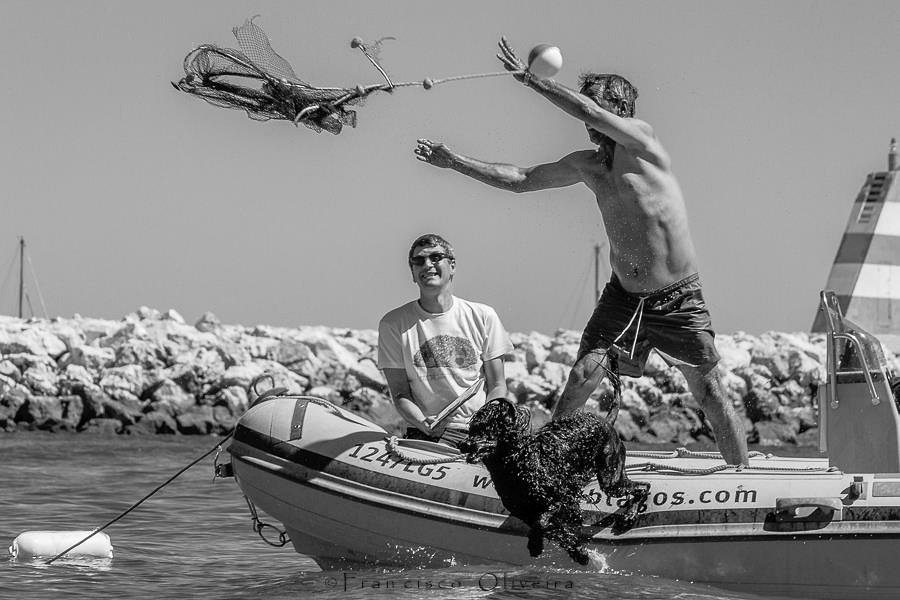
In this part of the exercise, the dog retrieves a floating object from the boat as part of a simulation of traditional work with a fishing net.
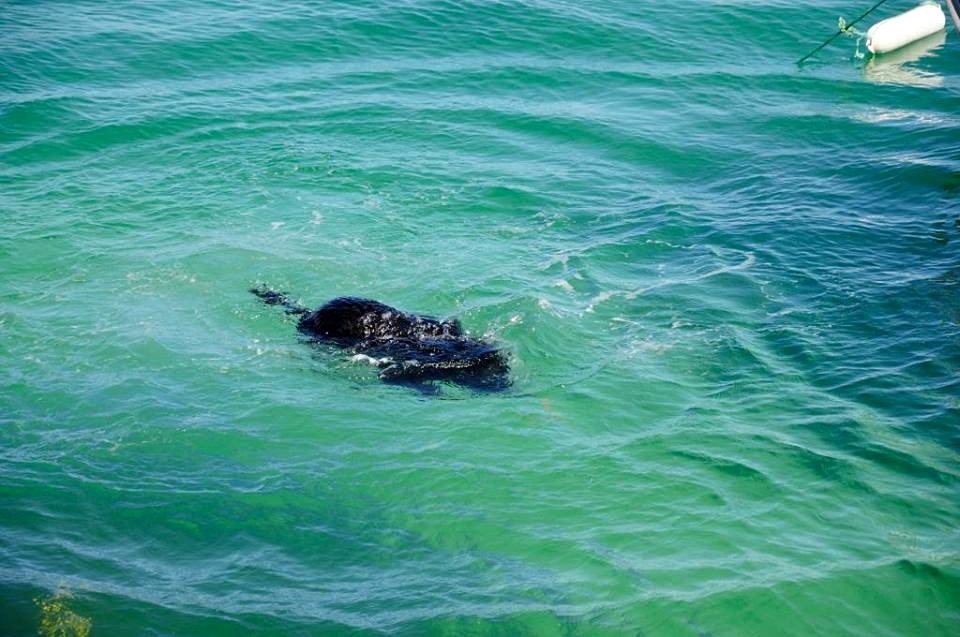
C – Delivery of the Object
After returning, the accurate delivery of the retrieved object to the handler is assessed.
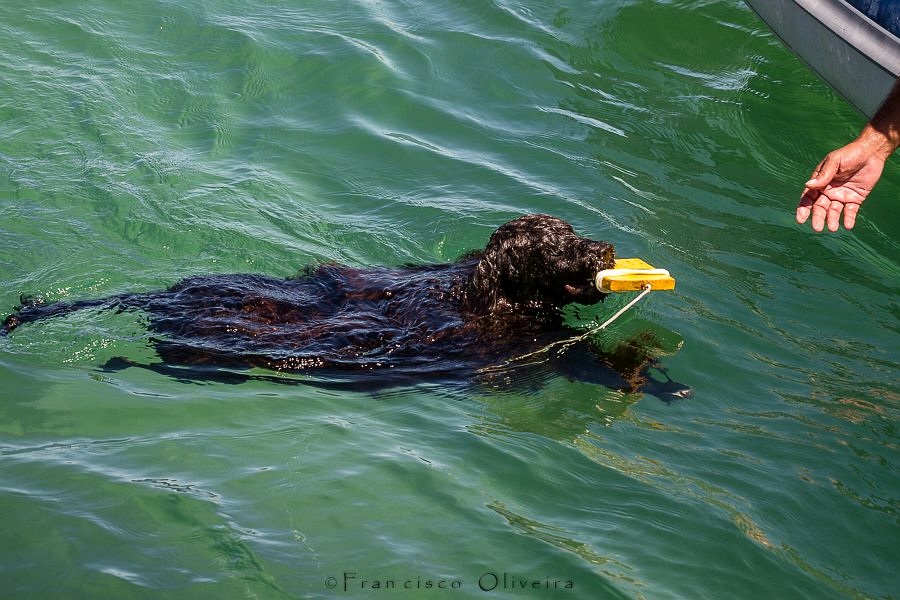
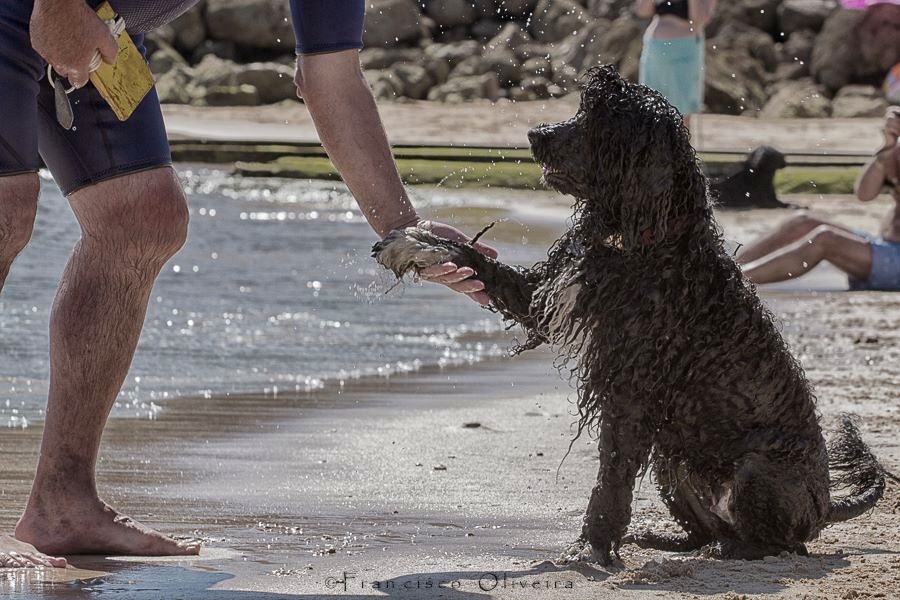
Water Is Their Element
Water trials help preserve the working abilities that made the Portuguese Water Dog an invaluable partner to fishermen for centuries.